University of Fashion Blog

Posts Tagged: "Christian Dior"

Is the New Look Totally Innocent in Perpetuating the Image of Idealized Femininity?

Christian Dior’s New Look (Image Credit: Vogue.com) and “Tradwife” aesthetic (Image Credit: People.com)

Christian Dior’s New Look (Image Credit: Vogue.com) and “Tradwife” aesthetic (Image Credit: People.com)

Paris in the late 1940s saw immense changes to its city, both socially and visually. Women traded in their work boots for heels, once again hearing the clack of each step against the cobblestone streets. During World War II, luxuries were not afforded under the restrictions of wartime rations.

1943 Bergdorf Goodman Sketch (Image Credit: The Met Digital Collections at metmuseum.org)

1943 Bergdorf Goodman Sketch (Image Credit: The Met Digital Collections at metmuseum.org)

As women entered the workforce during the war, slim shapes and sharp lines characterized global feminine styles for fear of excess waste in garment production. Assuming occupations of those called to war, women also visually emulated the (then) masculine nature of labor by donning utility suits and trousers.

But after the war’s end, the desire to grasp some semblance of normality plagued the world, as men returned to work. In post-war France, fashion houses scrambled to produce visions of extravagance and uniqueness: a new look that would define a generation and social period—one of recovery, celebration, and restoration.

Christian Dior’s New Look (Image Credit: Vogue.com)

Christian Dior’s New Look (Image Credit: Vogue.com)

In 1947, French designer Christian Dior debuted a characteristic look, an exaggerated revival of pre-war silhouettes. Coined the “New Look” by fashion writers, the design’s slim waist accentuated the extravagant billowing pleats of its skirt. The rigid shoulders of wartime suits were softened into curving lines, while sharpness instead shaped the waist into petite restriction. The style thus became a physical embodiment of the burgeoning post-war fashion markets and global economies. In its curvaceous allure, the “New Look” not only cemented Paris as an unwavering influence on global fashion but also represented a revival of the couture industry as a whole.

A pattern for a 1950s house dress (Image Credit: Pinterest.com)

A pattern for a 1950s house dress (Image Credit: Pinterest.com)

However, a style of dress that was made to exemplify a period of independence, was soon mobilized into a symbol of social confinement.

As the American ready-to-wear industry continued to develop in the 1950s, Dior’s “New Look” became synonymous with the vision of suburban motherhood and wifehood. The “house dress,” a shirtwaist dress often cinched at the waist and full in the skirt, was seen as suitable for all duties of the suburban household: cooking, cleaning, and silence.

Anne Fogarty’s book, Wife Dressing: The Fine Art of a Well-Dressed Wife (Image Credit: Panoplybooks.com)

Anne Fogarty’s book, Wife Dressing: The Fine Art of a Well-Dressed Wife (Image Credit: Panoplybooks.com)

In her 1959 book, Wife Dressing: The Fine Art of Being a Well-Dressed Wife, fashion designer Anne Fogarty described the simple austerity of the shirtwaist dress as ideal for one’s role in the home.

In this light, the “New Look” is a balance of constraint and freedom, as the waist cinches the liberating movement of its twirling pleats. With every flounce of its skirt, the garment models the cultural ideals of femininity as a normalcy in Western society. For the housewife, it accentuates the curves of her form into almost cartoonish shapes. The “New Look” isn’t a dress. It’s a body in motion, constructed by a male designer, and dictated into idealized, silhouetted perfection.

The “New Look” is undeniably beautiful; it revolutionized and revived the economy of global haute couture. Two things can be true at once. This hyper-feminine style overshadowed the freedoms granted to women during World War II. Used against the image of equality and progression in the 1950s, the “New Look”—while chic—was detrimental to the garmenting of women in post-war societies, confining them to visions of purity and softness.

Influencers who have embodied the “tradwife” aesthetic (Image Credit: People.com)

Influencers who have embodied the “tradwife” aesthetic (Image Credit: People.com)

It’s hard to ignore how this exaggerated silhouette has been weaponized throughout history. In recent years, the style has seen a rise in popularity with fluctuating trends, often in tandem with the rise in political conservatism in the United States. The “tradwife” aesthetic—one that preaches modest dress, hours working in the kitchen on homemade meals, and images of rural sanctuary in a child-filled home—riddled the internet in the months leading up to the 2024 presidential election. Characteristic of the popularized style, the “milkmaid dress” is constructed by floral prints, a soft bunching of fabric at the bust, and an A-line skirt: a silhouette descending from Dior’s 1947 design.

In 2025, media has been encouraging women to fulfill their duties in the home, in support of their working husbands. With many faces of the “tradwife” movement dressed in Dior’s characteristic design, the “New Look’s” soft femininity has likely been ubiquitously deemed suitable as its defining, idealized attire.

That is not to say that expressing one’s femininity through fashion always equates to social restriction. However, viewing shifting data in both the garment industry and political system, these hyper-feminine clothing styles do not diverge from accompanying conservative values. Fashion has always been impacted by the social beliefs of a period.

Care to share your thoughts?

Celebrating Women’s History Month: A Tribute to Fashion’s Inspiring Muses

Jean Paul Gaultier and his muse Madonna. (Photo Credit: Herb Ritts)

Happy Woman’s History Month! As we celebrate women and their innumerable accomplishments, UOF would like to pay tribute to the many fashionable women, throughout history, have inspired some of the most influential designers through the decades. Like they say…”behind every great man is a great woman”!

Givenchy and Hepburn go for a stroll together in Paris in an undated photo. (Photo Credit: Getty Images)

In the world of fashion, the relationship between designers and their muses is a tale as old as time, a symbiotic dance of  inspiration, creativity and innovation. Throughout history, these duos have shaped the very essence of style, leaving an indelible mark on the fashion landscape. From the glamour of the Golden Age of Hollywood to the avant-garde runways of Paris, the bond between male designers and their muses has been a driving force behind some of the most iconic fashion moments. To prove it, we are dedicating this blog to some of these timeless partnerships and would like to hear from YOU as to others you may be in the ‘know’ about and want to share.

PAUL POIRET AND DENISE BOULET

“My wife is the inspiration for my creations, she is the expression of all my ideals,” Poiret said. Here is the designer with his wife Denise Boulet. (Photo Credit: Getty)

At the dawn of the 20th century, Paul Poiret revolutionized fashion with his bold designs and visionary approach. Central to his creative vision was his wife, Denise Boulet. Poiret’s muse and collaborator, Boulet embodied the spirit of his designs, infusing them with grace and elegance. Together, they pioneered the shift from restrictive corsets to flowing, avant-garde silhouettes, forever changing the course of fashion.

HUBERT DE GIVENCHY AND AUDREY HEPBURN

Hubert de Givenchy and his muse Audrey Hepburn in 1988. (Photo Credit: The New York Times)

In the enchanting world of couture, few partnerships have captured the imagination quite like that of Hubert de Givenchy and Audrey Hepburn. Their collaboration began serendipitously when Hepburn, seeking a wardrobe for the film Sabrina,  crossed paths with Givenchy. The rest, as they say, is history. Hepburn became the epitome of chic sophistication, while Givenchy’s timeless designs adorned her with unparalleled elegance, creating an enduring legacy of style.

CHRISTIAN DIOR AND MIZA BRICARD

Christian Dior’s and his muse Mizza Bricard. (Photo Credit: MilkX TW)

In the aftermath of World War II, Christian Dior emerged as a beacon of hope, ushering in a new era of luxury and opulence with his iconic New Look. Central to his creative vision was Miza Bricard, his muse and confidante. With her impeccable taste and innate sense of style, Bricard inspired Dior to redefine femininity, thus shaping the fashion landscape for generations to come.

COCO CHANEL

Coco Chanel in her Paris apartment. (Photo Credit: Architectural Digest)

Not only male designers had muses. A fiercely independent Coco Chanel was her own muse, embodying the liberated spirit of the modern woman. Chanel’s timeless designs, from the iconic little black dress to the revolutionary Chanel suit, continues to resonate with women worldwide, a testament to her enduring legacy.

YVES SAINT LAURENT, BETTY CATROUX AND LOULOU DE LA FALAISE

Designer Yves Saint Laurent, Betty Catroux and Loulou de la Falaise. (Photo Credit: WWD)

Yves Saint Laurent’s illustrious career was defined by his close relationships with muses Betty Catroux and Loulou de la Falaise. With their androgynous allure and bohemian spirit, Catroux and de la Falaise inspired Saint Laurent to push the boundaries of fashion, creating groundbreaking designs that captured the zeitgeist of the era.

ROY HALSTON AND LIZA MINNELLI

Halston with his muse Liza Minnelli. (Photo Credit: Getty Images)

In the dazzling world of Studio 54, Roy Halston reigned supreme, transforming American fashion with his minimalist yet glamorous aesthetic. At the heart of his creative vision was Liza Minnelli, the iconic entertainer whose charisma and allure captivated audiences worldwide. Together, they epitomized the hedonistic glamour of the ’70s, leaving an indelible mark on fashion history.

BOB MACKIE AND CHER

Bob Mackie and his muse Cher. (Photo Credit: Elle)

Few partnerships have ignited the imagination quite like that of Bob Mackie and Cher. With her fearless style and boundary-pushing creativity, Cher became Mackie’s muse, inspiring some of the most unforgettable looks in fashion history. From the infamous sheer gown at the 1974 Met Gala to the elaborate costumes of her concert tours, Mackie’s designs transformed Cher and secured this duo’s place in fashion history books.

AZZEDINE ALAÏA AND GRACE JONES

Azzedine Alaïa and his muse Grace Jones. (Photo Credit: L’Officiel)

Azzedine Alaïa and Grace Jones forged a legendary partnership defined by their shared passion for sexy, avant-garde design. Jones’s striking beauty and fearless attitude inspired Alaïa to create sculptural masterpieces that defied convention, blurring the lines between fashion and art.

RALPH AND RICKY LAUREN

Ralph Lauren with his wife and muse Ricky Lauren. (Photo Credit: Architectural Digest)

Ralph Lauren’s iconic brand epitomizes the American Dream, embodying a vision of timeless elegance and sophistication. Central to his creative vision is his wife, Ricky Lauren, whose impeccable taste and refined sensibility have shaped the brand’s aesthetic for decades, creating a legacy of enduring style and luxury.

MARC JACOBS AND SOFIA COPPOLA

Marc Jacobs and his muse Sofia Coppola. (Photo Credit: L’Officiel)

Another dynamic duo is Marc Jacobs and Sofia Coppola. This creative partnership is defined by their shared love of art, culture, and style. Coppola’s effortless chic and understated elegance inspired Jacobs to create designs that resonate with women of all ages, blurring the lines between fashion and culture.

GIANNI AND DONATELLA VERSACE

Gianni Versace and his muse Donatella Versace. (Photo Credit: Elle)

Gianni Versace’s bold, provocative designs epitomized the excess and glamour of the ’80s and ’90s. Central to his creative vision was his sister, Donatella, whose fierce style and unwavering support propelled the Versace brand to international acclaim, creating a legacy of bold, daring fashion that continues to captivate the world. When Gianni was murdered in 1997, Donatella took control of the Italian Luxury brand and kept her brother’s legacy alive.

HERMÈS AND JANE BIRKIN

Jane Birkin and her namesake bag created by Jean-Louis Dumas of Hermes. (Photo Credit: Wonderland)

The former chairman of Hermès, Jean-Louis Dumas met actress Jane Birkin in 1984 and witnessed the contents of Birkin’s carry-on bag fall out while on a flight.  In a 2015 interview with The Telegraph, Birkin recounted that Dumas, who was sitting next to Birkin, said, “you should have one with pockets.” Birkin replied, “The day Hermès make one with pockets I will have that”, and he said: “But I am Hermès and I will put pockets in for you.”  Shortly after the two collaborated, the Birkin was created, becoming one of the most covetable accessories in fashion history. It has been reinvented many times since it was first introduced to the public in the 1980s. The Hermès bag’s classic elements include two rolled handles, a flap top, a touret, a clochette, and four clou “feet” and is available in sizes, 20, 25, 30, 40, 42 and 50 centimeters, some featuring exotic crocodile skin paired with diamond-encrusted white gold hardware. Today, there’s a year’s long wait list with some vintage Birkin bags selling for up to $2 million. Now that’s one successful female muse collaboration!

Care to share your designer muse story?


Haute Couture Renaissance: Spring 2024 Collections

- - Fashion Shows

Looks from Chanel’s Spring 2024 haute couture fashion show. (Photo Credit: Su Shan Leong)

In a world marked by fast fashion and fleeting trends, the magnificent realm of haute couture stands as a beacon of unwavering elegance and artisanal excellence. The term “haute couture” itself invokes images of meticulous craftsmanship, exquisite fabrics, and runway shows that transcend mere fashion, evolving into wearable art. As we navigate the ever-changing landscape of style, one cannot help but ponder the relevance of haute couture today and acknowledge its enduring mark on the fashion industry.

Looks from Valentino’s Spring 2024 haute couture fashion show. (Photo Credit: The Impression)

The  words “haute couture” translates to “high sewing” in French, and this meticulous craftsmanship is at the heart of what makes it so unique and relevant. Unlike ready-to-wear collections that cater to mass markets, haute couture is a celebration of bespoke tailoring, where garments are meticulously crafted by skilled artisans to fit the individual client’s body like a second skin. This dedication to perfection ensures that each piece is not merely clothing but a work of art, an embodiment of the designer’s vision, and a testament to the client’s personality.

One might argue that haute couture is an anachronism in our fast-paced, digitally driven world, but it is precisely this anachronism that makes it so significant. In an era dominated by immediacy, haute couture is a reminder that true artistry takes time. The months spent handcrafting a single gown, the attention to every minute detail, and the emphasis on quality over quantity are a stark departure from the disposable nature of contemporary fashion. Haute couture embodies a philosophy of mindful consumption and an appreciation for the art of slow fashion.

Looks from Fendi’s Spring 2024 haute couture fashion show. (Photo Credit: CNN)

Beyond its intrinsic value, haute couture serves as the laboratory of innovation for the fashion industry. Designers who partake in this rarefied world push the boundaries of creativity, experimenting with avant-garde techniques, materials, and designs that often find their way into more accessible fashion later on. The runway shows become a visual symphony, where designers collaborate with skilled artisans, photographers, and makeup artists to create a mesmerizing experience that transcends the mere display of garments and produce some of THE most amazing social media images. Many of these posts are suitable for framing.

Looks from Robert Wun’s Spring 2024 haute couture fashion show. (Photo Credit: People)

The allure of haute couture extends beyond its aesthetic splendor. It is a powerful storyteller, reflecting the spirit of its time. Designers often draw inspiration from cultural, historical, or social influences, using their collections to make powerful statements or challenge conventional norms. Haute couture is a canvas for self-expression, allowing designers to weave narratives that resonate with the collective consciousness.

Furthermore, haute couture plays a pivotal role in sustaining traditional craftsmanship. In an era where technology threatens to replace skilled artisans with machines, haute couture remains a sanctuary for the preservation of age-old techniques. The ateliers are a haven for master embroiderers, seamstresses, and tailors whose expertise has been honed through generations. By investing in these crafts, haute couture ensures the survival of skills that might otherwise be lost in the relentless march of progress.

Kris Jenner, Kim Kardashian and Kylie Jenner are seen arriving at the Maison Margiela Fashion show. (Photo Credit: Getty Images)

And while Haute couture was filled with celebrity sightings such as Zendaya, Jennifer Lopez, the Kardashian and Jenner clan, Rihanna, and Natalie Portman to name a few, the stars did not outshine the triumphant return of Haute Couture at its best.

Looks from Christian Dior’s Spring 2024 haute couture fashion show. (Photo Credit: LVMH)

Of course, there were plenty of beautifully crafted pieces such as airy chiffon and tweed at Chanel, and Dior’s quiet luxury extravaganza. But there were a few shows that really broke the mold and pushed boundaries, that we are highlighting below:

MAISON MARGIELA

Video of Maison Margiela Haute Couture Spring Summer 2024 Collection. Video Courtesy of YouTube FF Channel.

John Galliano is a master at storytelling and for his Maison Margiela Couture Spring 2024 collection, the maestro turned out one of the most celebrated and emotional couture collections for the luxury fashion house to date. The show had it all, theatrical, rebellious, and oh so sexy. According to the house notes —it started with Brassai’s 1920s and ’30s portraits of the night-time underbelly of Paris’s clubs and streets.

This dark yet sexy inspiration turned into a dramatic work of art in Galliano’s hand. The extremely creative designer created a collection filled with extreme corsetry, padded hips, and erotically sheer lace dresses, paired with wildly imaginative hair, chiffon-masked makeup, and eerie doll-like body-modifications. “Galliano also created some scandalous hourglass dresses there was pubic hair to be seen through tulle and lace (they were merkins on underwear, but still bound to stir up a storm)” according to Vogue.

This certainly will be one show that will be praised for years to come as one of Galliano’s best and most theatrical for the House of Mason Margiela. And after years of Quiet Luxury fashion, we are all ready for dramatic fashion again.

SCHIAPARELLI

Video of Schiaparelli Haute Couture Spring Summer 2024 Collection.  Video Courtesy of YouTube FF Channel.

In a galaxy far, far away….. Daniel Roseberry had ignited the Schiaparelli house into one of the most sought out brands in only a few short seasons, and for his Spring 2024 Couture Collection, he did not disappoint his A-List fans. His Sci-Fi meets Western-inspired collection came complete with a robot baby and all.

Roseberry looked to both the future and the past for inspiration. The creative director for Schiaparelli melded retro technology, classic sci-fi movies and a nod to his Texan childhood. He created an exquisite exoskeleton dresses and an entire 3D spine inspired by both Elsa Schiaparelli’s radical 1938 skeleton dress and Giger aliens from the Alien movie series. “Dressage braids” inspired the knots on a cream leather suit that nearly looked like it could have been a space uniform from NASA and let’s not forget the nestling robot baby on a model’s hip – she was wearing a white singlet and conceptual couture cargo pants—Roseberry’s tribute to Sigourney Weaver as Ripley. “I’ve watched the Alien series, like, six times,” he said in a backstage interview with Vogue.

As for Roseberry Texas roots, there were silver-tipped Western belt buckles which formed a corset, an intricate embroidered jacket with fringe detail, and let’s not forget the horse-tail gown that Zendaya rocked at the show.

JEAN PAUL GAULTIER

Video of Gaultier by Simone Rocha Haute Couture Spring Summer 2024 Collection. Video Courtesy of YouTube FF Channel.

All eyes are on the Maison Jean Paul Gaultier as the illustrious designer, Simone Rocha takes the helm for the Haute Couture Spring 2024 show, a mesmerizing fusion of two visionary forces.

Simone Rocha, renowned for her poetic designs that seamlessly blend tradition and modernity, steps into the spotlight, bringing her signature ethereal touch to the hallowed halls of Gaultier.

The show opens with a flourish of cascading ruffles, paying homage to Gaultier’s bold and irreverent spirit. The juxtaposition of Rocha’s signature pearl embellishments against Gaultier’s iconic Breton stripes creates a visual symphony that resonates with both innovation and tradition. As each model glides down the runway, the fusion of these two design philosophies becomes a harmonious celebration of fashion’s ever-evolving tapestry.

The collection was filled with Gaultier-inspired pink cross-laced satin corsetry, and paid tribute to the house classics, turning his Breton stripes into a t-shirt made entirely of ribbons and bows.

Rocha also created exquisite haute couture ballgown—romantic-ballerina shapes made from layers and layers of tulle. It was a magnificent show that won the audience over—and according to Vogue, Rocha received a giant hug from Monsieur Gaultier himself.

So, tell us, what was your favorite haute couture show this season?

8 EXCITING FASHION EXHIBITS TO CHECK OUT IN 2023

Thierry Mugler: Couturissime (Photo Credit: Hypebeast)

Beat the winter blues by immersing yourself in real-life fashion experiences this season as museums around the world are offering plenty of brilliant fashion exhibitions. After all, nothing beats seeing the magic of intricate embroidery, statement-making designs, or avant-garde  silhouettes up-close-and-personal. Louise Wallenberg, the author of Art, Life and the Fashion Museum, perfectly stated, “Costume can tell us more than any other type of museum collection about how people looked, felt, and lived at any particular time. A garment can be regarded as the remaining outer shell of a living person and will reflect that person’s taste, position or way of life.”

Fashion exhibits give us a glimpse of history through garments, as well as a desire to escape into a whimsical fantasy that beautiful clothing can conjure up. Over the last decade, museums and fashion houses have created more fashion exhibits then ever before. In 2019, Christian Dior: Designer of Dreams opened at London’s V&A and broke the museum’s attendance records, attracting over 700,000 people across its seven-month tenure (great news: the exhibit is currently showing in Tokyo). Today, at V&A in London, the Africa Fashion exhibition (until April 16, 2023) has proven to be so popular that the museum is looking to hold on to over 70 pieces for its permanent collection. Meanwhile, in 2018, the Heavenly Bodies exhibit at the New York Met, blew past attendance rates out of the water.

Sure, it takes years of work by curators, historians, and creatives, but viewing a curated fashion exhibit can be an eye-opening experience for fashion lovers with people coming from all over the world to see a well curated exhibit. From original sketches to the final result, coming face to face with a designers perfectly lit and positioned creative process is mesmerizing –it’s so rare to have access to these treasures in an industry forever thriving off its exclusivity.

If you’re looking for a list of museums that offer fashion exhibitions, check out UoF’s FREE list located under the Resources tab on our Home Page.

If you’re looking to get educated on the all things fashion industry related, check out the Historical Dictionary of the Fashion Industry Second Edition, co-written by our founder, Francesca Sterlacci.

So, as you make your plans for the year, here’s a list of the shows you should be adding to your calendar:

Alexander McQueen: Mind, Mythos, Muse

Alexander McQueen: Mind, Mythos, Muse at the National Gallery of Victoria (NGV) International in Melbourne, Australia until April 16, 2023 (Photo Credit: LVH)

Alexander McQueen is one of the most original fashion designers in recent history. Celebrated for his conceptual and technical virtuosity, McQueen’s critically acclaimed collections synthesized his proficiency in tailoring and dressmaking with visual references that spanned time, geography, and media.

Showcasing more than 120 garments and accessories, Alexander McQueen: Mind, Mythos, Muse offers insight into McQueen’s far-reaching sources of inspiration, his creative processes and capacity for storytelling. Displayed alongside McQueen’s innovative designs are more than eighty artworks – spanning painting, sculpture, textiles, prints, photography and decorative arts – that help to illuminate the interdisciplinary impulse that defined his career. Drawn from the collections of the National Gallery of Victoria and the Los Angeles County Museum of Art – the exhibition reveals common themes and visual reference points that connect his practice with that of artists and designers throughout history. McQueen’s designs were always personal and complex responses to the world around him: he once stated, “fashion is just the medium’”. McQueen’s interests were broad and his inspirations both encyclopedic and autobiographical: he was an avid reader of books on subjects that included, art, design, literature and history. His love of fashion was evident from a young age, and was equally influenced by popular culture as by visits to museums. Throughout his career, McQueen distilled a multitude of ideas and experiences, bringing together seemingly disparate references to create collections that pushed far beyond the bounds of conventional fashion design.

Thierry Mugler: Couturissime

Thierry Mugler: Couturissime at the Brooklyn Museum, Brooklyn, New York until May 7, 2023 (Photo Credit: The New York Times)

Thierry Mugler: Couturissime is a travelling retrospective that explores the edgy universe of the visionary French designer who created bold silhouettes using unorthodox techniques and materials.

In the 1970s, Mugler defined trends with his acclaimed “glamazon,” a chic, modern woman whose style evolved from the hippie fashions of the 1960s. In the ’80s and ’90s, he galvanized the renaissance of haute couture through his provocative collections and theatrical fashion shows, which involved grandiose locations and the era’s most iconic models.

The exhibition includes an expanded section dedicated to fragrance, centered on Mugler’s scent Angel.

Gianni Versace Retrospective

Gianni Versace Retrospective at the Groninger Museum, in Groningen, Netherlands until May 7, 2023 (Video Credit: YouTube Groninger Museum)

In the Gianni Versace Retrospective, the Groninger Museum brings to life the career of the eccentric Italian fashion designer, one of the most influential couturiers in history. The colorful, daring exhibition takes visitors inside a world of extravagant garments and lavish catwalk shows where clothes, pop music and design come together in spectacular fashion.

Along with couture pieces, the Gianni Versace Retrospective includes books, advertising images, and other objects that show the Italian designer’s versatility and his impact on the fashion world.

Christian Dior: Designer of Dreams

Christian Dior Designer of Dreams at the Museum of Contemporary Art Tokyo until May 28, 2023 (Photo Credit: Luxferity)

The Christian Dior: Designer of Dreams exhibit takes on a new narrative as a tribute to Japanese culture. The major retrospective spotlights more than seventy-five years of the House of Dior, from the artistic influences of the founding couturier to the various artistic directors who have succeeded him: Yves Saint Laurent, Marc Bohan, Gianfranco Ferré, John Galliano, Raf Simons and Maria Grazia Chiuri.

The exhibition retraces Christian Dior’s fascination with the creative richness of Japan, which inspired his collections from the outset.

Karl Lagerfeld: A Line of Beauty

Karl Lagerfeld: A Line of Beauty at The Metropolitan Museum of Art, New York City, from May 5–July 16, 2023 (Photo Credit: The New York Times)

A major retrospective of the iconic designer, who passed away in 2019, will examine Lagerfeld’s stylistic vocabulary as expressed through his lines and aesthetic themes that appear time and again.

The exhibition will explore Lagerfeld’s complex working methodology, tracing the evolution of his fashions from the two dimensional to the three dimensional, said Curator Andrew Bolton, “The fluid lines of his sketches found expression in recurring aesthetic themes in his fashions, uniting his designs for Balmain, Patou, Chloé, Fendi, Chanel, and his eponymous label, Karl Lagerfeld, creating a diverse and prolific body of work unparalleled in the history of fashion.”

Andy Warhol: The Textiles

Andy Warhol: The Textiles at The Fashion & Textile Museum, London, until September 10, 2023 (Photo Credit: Texintel)

This exhibit explores the beautiful and fascinating textile designs by the influential pop artist and icon Andy Warhol and his unknown and virtually unrecorded world of textile designs. Dating from his early career as a commercial designer and illustrator in the 1950s and early 1960s, Warhol’s textiles are now considered an important part of his body of work.

The exhibition includes over 45 of Warhol’s textile patterns from the 1950s and early 1960s, depicting an array of colorful objects – ice cream sundaes, delicious toffee apples, colorful buttons, cut lemons, pretzels and jumping clowns exhibited both as fabric lengths, some in multiple colorways, and as garments. Some of the most important manufacturers in American textile history are also represented, such as Stehli Silks, Fuller Fabrics Inc., and M Lowenstein and Sons.

Gabrielle Chanel. Fashion Manifesto

Gabrielle Chanel. Fashion Manifesto at V&A Museum, London, September 16, 2023  to February 25, 2024 (Photo Credit: Another Magazine)


Gabrielle Chanel. Fashion Manifesto exhibition will chart the evolution of Coco Chanel’s iconic design style and the establishment of the House of CHANEL, from the opening of her first millinery boutique in Paris in 1910, to the showing of her final collection in 1971.

At a time when Paul Poiret dominated the world of women’s fashion, in 1912 Chanel went to Deauville then to Biarritz and Paris, and subsequently revolutionized the world of Haute Couture, adorning the bodies of her contemporaries with what amounted to a fashion manifesto. The first part of the exhibition is chronological; it recounts her early beginnings with a few emblematic pieces, including the famous 1916 marinière, the sailor blouse, in jersey. The second part of the exhibition is themed around her dress codes: the braided tweed suit, two-tone pumps, the 2.55 quilted bag, black and beige naturally, but also red, white and gold… and, of course, the costume and the fine jewelry that were intrinsic to the Chanel look.

IRIS VAN HERPEN

Iris van Herpen at the Musée des Arts Décoratifs, Paris, from November 29, 2023 – April 28, 2024 (Photo Credit: Musée des Arts Décoratifs)

Organized as an immersive and sensory exploration into the designer’s universe, this retrospective will merge fashion, contemporary art, design and science, and revolve around eight themes that identify the very essence of one of the most avant-garde creators of her generation.

Founded in 2007, and now a member of the Fédération de la Haute Couture, the Maison of Iris van Herpen is known for fusing technology and traditional couture craftsmanship. Her work contemplates fashion as an interdisciplinary language and dynamic entity, which often results in various collaborations with other creatives and thinkers, such as sculptor Anthony Howe, architect Philip Beesley or even more recently with the artist Casey Curran.


So, if you are a designer, or among the ‘fashion curious’ crowd, these fashion exhibitions are activities that you should be adding to your calendar. Who doesn’t need a little design inspiration once in a while.

So tell us, what fashion exhibits are you excited to see this year?

MORE THAN JUST “THE NEW LOOK”- CHRISTIAN DIOR: DESIGNER OF DREAMS EXHIBIT

- - Fashion Art

Looks from the Brooklyn Museum’s Christian Dior Designer of Dreams Exhibit. (Photo Credit: AFP)

The Brooklyn Museum is giving every museum with a fashion wing a run for its money!

Pre-Covid, the Brooklyn Museum hosted Pierre Cardin: Future Fashion, which was on exhibit from July 20, 2019 to Jan 5, 2020. And now, NYC’s third largest museum is showcasing another masterful exhibit, Christian Dior: Designer of Dreams. Like most fashionistas, when we think of the House of Dior, the ‘New Look’ comes to mind, well, get ready…it’s way more than just another heritage house!

In a Time Out magazine interview with Matthew Yokobosky, Senior Curator of Fashion and Culture, “The Brooklyn Museum has a long record of recognizing important contributions in the history of fashion design, from ‘The Story of Silk (1934)’ to the groundbreaking ‘Of Men Only (1976)’ to the recent ‘Pierre Cardin: Future Fashion (2019’) and now ‘Christian Dior: Designer of Dreams.’ Each exemplifies the power of fashion to influence and shift visual culture at large.”

Looks from the Brooklyn Museum’s Christian Dior Designer of Dreams Exhibit. (Photo Credit: Christian Dior)

Christian Dior: Designer of Dreams opened to the public on September 10, 2021, and will be on display until Saturday, February 19, 2022. The exhibit, co-curated by Dior scholar Florence Müller of the Avenir Foundation Curator of Textile Art and Fashion at the Denver Art Museum, fully explores the high fashion history of the House of Dior that dates back to the turn of the 20th century, when the French designer Christian Dior founded the label.

Looks from the Brooklyn Museum’s Christian Dior Designer of Dreams Exhibit. (Photo Credit: Time Out)

The multi-gallery exhibition transports guests to the mystical world of the House of Dior with objects that mostly hail from the vast Dior archives of some 200 haute couture garments, as well as photographs, archival videos, sketches, vintage perfume elements and accessories.

Looks from the Brooklyn Museum’s Christian Dior Designer of Dreams Exhibit. (Photo Credit: Christian Dior)

Upon entering the circular-shaped exhibit, guests are captivated with a bold video of models strutting down the runway in a variety of Dior looks. Visitors are then thrust into mid-20th century fashions looks that were once worn by starlets like Marilyn Monroe and Audrey Hepburn.

Looks from the Brooklyn Museum’s Christian Dior Designer of Dreams Exhibit. (Photo Credit: Christian Dior)

The exhibition is set up within two rings — an outer ring featuring distinct sections that detail the history, the legacy and the inspiration of Christian Dior, while and the inner ring is where ‘The Enchanted Garden’ exists.

The majority of looks are modeled on mannequins along the walls, but a few exceptional looks are pulled out to give guests a 360-degree view of the garments. Once you enter the inner circle, the climax of the exhibition reaches new heights as it transforms into a whimsical space where Dior’s creations become part of the landscape that seemingly float up to the ballroom’s ceiling with projections of clouds and birds that move across the walls.

The exhibit’s creative design lets you to dig right into the subject matter at hand – fashion at it’s best. Each Dior look is a masterpiece in and of itself. The timeless ball gowns, the elegant suits, and the form-fitting jackets are all highlighted in the exhibit. The haute couture on view exemplifies many of the French couturier’s fabled silhouettes, including the “New Look”, which debuted in 1947. Guests have the opportunity to get a close-up view of these  incredible garments, actually getting to see the intricate embroidery, trim, lace and construction of almost every piece (with the exception of the looks that are near the actual ceiling).

Christian Dior’s Bar Suit from his Haute Couture Spring 1947 collection. Dior Héritage collection, Paris. (Photo Credit: Brooklyn Museum)

Aside from the breathtaking creations in the installation, the exhibition also features a section of Dior fashion photographed by some of the world’s most superb fashion photographers such as Richard Avedon, Irving Penn, Gordon Parks and Richard Rutledge. These awe-inspiring images are inspirational – not only because of the Dior looks featured in the pictures, but of the sheer beauty of the photos themselves, black and white and some in dramatic color.

Throughout the decades, celebrities across the globe have worn Dior for a variety of events, from red-carpet appearances to the Oscars. These particular looks are featured in a section identified as “Stars in Dior”, which is covered with literal projected stars. In this segment guests get to view the exact looks worn by celebrities over time, from Jennifer Lawrence and Nicole Kidman to Princess Diana and Grace Kelly. Each outfit corresponds back to the photo of the celebrity who wore it.

A portrait of Christian Dior. (Photo Credit: Vogue UK)

For those museum-goers interested in fashion history, you’re in luck! You will learn about the history and legacy of the House of Dior’s founder Christian Dior, as well as the creative artistic directors who succeeded him—Yves Saint Laurent, Marc Bohan, Gianfranco Ferré, John Galliano, Raf Simons, and Maria Grazia Chiuri, each of which have exquisite haute couture on display.

Looks from the Brooklyn Museum’s Christian Dior Designer of Dreams Exhibit. (Photo Credit: Christian Dior)

“Today, the work of Maria Grazia Chiuri has reshaped the Dior dream for a new generation, with a worldview that brings with it inclusivity and respect as key philosophical directives. We couldn’t be more excited to present these innovative, beguiling—and technically outstanding—designs to our audiences,” Yokobosky says.

If you can’t make it to the Brooklyn Museum to see the exhibit, here is a virtual tour:

A video on the Christian Dior Exhibition at the Brooklyn Museum. Video Courtesy of Fox 5 New York on YouTube.

As you all know, here at University of Fashion, our mission is to preserve the art and craft of fashion design. Therefore couldn’t agree more with this quote:

“I wanted to be considered a good craftsman. I wanted my dresses to be constructed like buildings, molded to the curves of the female form, stylizing its shape.” ~Christian Dior

So tell us, which great craftsperson would you like to see exhibited next?

ICONIC FASHION DESIGNERS ON THE SILVER SCREEN

An image from the film Saint Laurent. (Photo Courtesy of Mandarin Films/ EuropaCorp)

Let’s face it, it’s been a tough year and a half, between the global pandemic, and all the political and social unjust in the world today, we can all use a break from reality and escape into the magical world of film. So here at UoF, we compiled a list of some of our favorite films based on, you guessed it, fashion designers.  Whether it’s a biopic on Yves Saint Laurent’s life, Gabrielle Chanel’s first steps into the fashion, or a brush up on some fashion history with documentaries covering the glamorous life of Valentino, the rebellious escapades of Vivienne Westwood, or the agony and the ecstasy of Alexander McQueen, one thing is for sure, we LOVE to peer into the secret lives of fashion designers. Just check out the 82% Rotten Tomatoes audience score that the latest Halston biopic series on Netflix got and the 88% score that the 2019 Halston documentary received.

Whether it’s a documentary or a scrumptious little slice of fiction, these films transport us to another world with eccentric stories and extravagant anecdotes that make up the theatrical, glittering and whimsical world of fashion.

START THE POPCORN

Without further ado, here are a few of our favorite films and documentaries based on some of the most innovative designers. I guess you can all them the University of Fashion Oscars!

SAINT LAURENT (2014)

Saint Laurent official trailer. (Courtesy of Sony Pictures Entertainment)

Saint Laurent is a 2014 French biographical drama film about Yves Saint Laurent. The film was co-written and directed by Bertrand Bonello;  the film stars Gaspard Ulliel as Yves Saint Laurent, Jérémie Renier as Pierre Bergé, and Louis Garrel as Jacques de Bascher. The film centers on Yves Saint Laurent’s life from 1967 to 1976, which was the peak of his career, as he becomes one of the most iconic designers in the history of fashion.

The film examines the mythical and sometime scandalous life of the late Yves Saint Laurent. The director transports the audience into the 1970s, to a time where the designer was known for sporting both innovative and elegant outfits. In a divine journey into Yves Saint Laurent’s mind, the director examines this era, filled with folly and changing tides. Gaspard Ulliel offers an intense portrayal of the designer, who dives into a world of drugs and partying to silence his inner demons and his chronic, acute depression.

Saint Laurent was selected as the French entry for the Best Foreign Language Film at the 87th Academy Awards, but was not nominated.  In January 2015, Saint Laurent received ten César Award nominations, including Best Film, Best Director, Best Actor, and Best Supporting Actor. It also received five nominations at the 20th Lumières Awards, winning Best Actor for Gaspard Ulliel.

COCO BEFORE CHANEL (2009)

A preview of Coco Before Chanel. (Courtesy of YouTubeMovies)

Coco Before Chanel is a biographical film based on the start of Gabrielle “Coco” Chanel’s extraordinary career.  The French film was directed by Anne Fontaine and stars Audrey Tautou as she plays a young Coco Chanel. The story of Coco Chanel’s journey from obscure, headstrong orphan to the legendary couturier who represented the modern woman and became an eternal symbol of success, freedom and style.

The French director decided to focus on the designer before her time of glory, to better understand the woman behind the fashion icon, and portrays a wounded woman, bruised by her neglected childhood and her tragic love stories.

By day, young Coco works as a seamstress, but at night, she performs as a cabaret entertainer.  Coco then meets a wealthy heir (Benoît Poelvoorde) and becomes not only his lover, but also his fashion consultant. Gabrielle “Coco” Chanel throws herself as passionately into her work as she does into her love life. Audrey Tautou gracefully embodies this great Mademoiselle who liberated women with her sleek, straightforward clothes. Tired of the flowery hats, tight corsets and yards of lace that define women’s fashion, Coco infused her lover’s clothing as a starting point to refine an elegant and sophisticated line of women’s clothing that propels her to the top of Parisian haute couture.

DIOR AND I (2014)

Dior And I official trailer. (Courtesy of Madman Films)

Dior and I (French: Dior et moi) is a 2014 French documentary film written and directed by Frédéric Tcheng. The film captures the artistic genius of designer Raf Simons as he creates his first haute couture collection as the new artistic director of Christian Dior.

The film premiered at the Tribeca Film Festival on April 17, 2014. The film focused upon Simons’ debut season at Dior and includes non-speaking cameo appearances by Marion Cotillard, Isabelle Huppert, Jennifer Lawrence, and Sharon Stone. The documentary received positive reviews by critics.

Dior and I brings the audience inside the storied world of the Christian Dior fashion house with a privileged, behind-the-scenes look at the creation of Raf Simons’ first haute couture collection -a true labor of love created by a loyal group of collaborators. Melding the everyday, pressure-filled elements of fashion with mysterious echoes from the iconic house’s past, the film is also a colorful homage to the seamstresses who serve Simons’ vision.

VALENTINO: THE LAST EMPEROR (2008)

Valentino: The Last Emperor official trailer. (Courtesy of YouTube)

Valentino: The Last Emperor is a documentary film about the life of famed Italian fashion designer Valentino Garavani, the designer and founder of the legendary label Valentino. It was produced and directed by Matt Tyrnauer, Special Correspondent for Vanity Fair magazine. The picture documents the dramatic final act of Valentino’s career, tells the story of his life, and delves into the heart of the fashion industry. The documentary also delves into the loving relationship between Valentino and his business partner and companion of 50 years, Giancarlo Giammetti.

Valentino Garavani opened his first fashion house in 1959. In 2007, Valentino shocked the fashion world as he revealed his retirement plans and began preparing for his final fashion show. The documentary follows Valentino during the last two years of his time as a designer, as he gets ready to conclude his fashion career; as well as his worries about the intentions of the corporation buying his namesake label.

The filmmakers shot over 250 hours of footage with exclusive access to Valentino and his entourage. “We were let into the inner circle, but we had to stick it out for a long time, practically move in, to capture the truly great moments,” says Tyrnauer in an interview with Italian Living. “Valentino is surrounded by a tight-knit family of friends and employees, but, eventually, their guard came down and they forgot there was a camera crew in the room.”

“Valentino was one of the first designers to make himself the inspirational figure at the center of the story he was telling,” says Tyrnauer in an interview with Vanity Fair. “He is a born dreamer and the last true couturier, who let us in on his creative process and also let us in on the life he built around him to sustain this process,” adds Tyrnauer. “He lives as lavishly as his clients and set a standard for the industry. He shuts out all that is not beautiful, and we followed him around the world to capture that special world.”

WESTWOOD: PUNK. ICON. ACTIVIST. (2018)

Westwood: Punk. Icon. Activist. official trailer. (Courtesy of Madman Films)

Vivienne Westwood has been disrupting British fashion for more than 40 years, using her fashion status fame as a platform for her political, social and environmental activism. In 2018, filmmaker Lorna Tucker releases a feature-length documentary about the designer, Westwood: Punk. Icon. Activist. chronicling the incredible career of the designer.

Vivienne Westwood ignited the punk movement with ex-partner and Sex Pistols’ manager Malcolm McLaren, and the iconic designer has been redefining British fashion since 1971. She is responsible for creating many of the most distinctive pieces of recent time. Blending archival footage and insightful interviews a portrait emerges of Vivienne’s fascinating network of collaborators, taking the audience on her journey — from a childhood in postwar Derbyshire to the runways of Paris and Milan.

Westwood: Punk. Icon. Activist. is the first film to embody the extraordinary story of one of the true icons of our time, as she fights to maintain her brand’s integrity, her principles – and her legacy. The documentary was screened at the Sundance film festival on January 20, 2018, in the World Cinema Documentary Competition.

MCQUEEN (2018)

https://youtu.be/cVQVxcK6v3A

A preview of the MCQUEEN trailer. Courtesy of YouTube.

McQueen is a 2018 biographical documentary film, directed by Ian Bonhôte, written and co-directed by Peter Ettedgui, and produced by Ian Bonhôte, Andee Ryder, Nick Taussig, and Paul Van Carter under the banner of Misfits Entertainment, and Salon Pictures. The documentary looks into life and career of the late British fashion designer Alexander McQueen.

The life of Alexander McQueen is a rags-to-riches story, a modern-day fairy tale, laced with the gothic, tragic twist. The designer started his career in his teens before gaining notice as designer for Givenchy and launching his own label in 1992, which continues to this day under the creative direction of Sarah Jane Burton. Mirroring the savage beauty, boldness and exuberance of his creations, this documentary is an intimate exposé of McQueen’s own world, both tortured and inspired, which celebrates a radical and hypnotic brilliance of great influence. Sadly the brilliant designer took his life February 11, 2010

The film is a personal look at the extraordinary life, career and artistry of Alexander McQueen. Through exclusive interviews with his closest friends and family, recovered archives, exquisite visuals and music, McQueen is an authentic celebration and thrilling portrait of an inspired yet tortured fashion visionary.

Let us know, which is your favorite film?

RESORT 2022 – THE JOY OF DRESSING CONTINUES

Looks from Versace’s Resort 2022 Collection. (Photo Credit: Versace)

As we celebrate Father’s Day and our newest U.S. federal holiday, Juneteenth (marking the end of slavery), and as the number of COVID cases continue to drop as vaccination numbers rise, we have a lot to look forward to post-pandemic.

After a year and a half of pandemic fashion, sales are soaring as people are starting to dress up again. What are they  gravitating to? The answer? Happy, colorful fashion. And judging by Resort 2022, the message is loud and clear.

Dior’s Cruise Show (Courtesy of YouTube).

Designers’ all got the memo and Resort 2022 collections were simply great. Just released images of the collections presented to buyers and the press included some fully staged spectacles in exotic locations that resulted in a desire to travel once again. Maria Grazia Chiuri presented her Dior Cruise collection in the birthplace of sports, the Panathenaic Stadium, where Ancient Greeks showed off their athletic capabilities circa 330 BC. Meanwhile, Virginie Viard took her graphic Chanel cruise collection to Provence, a beautiful region in the south of France, considered one of the area’s loveliest villages and the inspiration behind a few of Vincent van Gogh’s landscape masterpieces. Speaking of Van Gogh, have you reserved your tickets yet for the Immersive Van Gogh Exhibit touring the country?

Chanel’s Cruise Show. Courtesy of YouTube.

WHAT IS A RESORT COLLECTION?

For those unfamiliar with resort collection or cruise collection, and sometimes referred to as holiday or travel collection (collection croisière, in French), is an inter-season or pre-season line of ready-to-wear clothing produced by a fashion house or fashion brand in addition to the recurrent twice-yearly seasonal collections – spring/summer and autumn (or fall)/winter – heralded at the fashion shows in New York, London, Paris and Milan.

Cruise collections were initially created for affluent customers or “more seasoned jet-setters” going on cruises or vacationing in the warm Mediterranean during the winter months,. Cruise collections are synonymous with light and airy summer clothing and shipped to stores in the middle of the cold winter months. While the idea of cruise wear sounds old fashion and elitist, today’s fashion savvy customers view the season as a chance to spruce up their winter wardrobes as they head into Spring.

A look from No. 21’s Resort 2022 Collection. (Photo Credit: No. 21)

Resort collections typically hit the stores in November, perfect timing for Holiday shopping; the season is an extra opportunity for brands to rack up some extra sales. Resort has become an incredibly important season for vendors, beyond the promise of clothes with mainstream appeal, Resort remains on sales floors longest without ever going on sale, approximately 6 months before hitting the sales rack, which makes it the most profitable season for most brands.

A look from Brandon Maxwell’s Resort 2022 Collection. (Photo Credit: Brandon Maxwell)

While the season is still in full swing, here are a few key trends of the season so far:

OUT OF CONTROL LOGOMANIA

Designer logos are everywhere this resort season from Gucci’s double G splattered all over suits, outerwear, and accessories, to a more subtle Versace Greek Key logo on dresses, tops and headscarves; one thing is for sure, you will definitely be noticed in these bold looks.

A look from Gucci’s Resort 2022 Collection. (Photo Credit: Gucci)

A look from Versace’s Resort 2022 Collection. (Photo Credit: Versace)


A look from Chanel’s Resort 2022 Collection. (Photo Credit: Chanel)

A look from Balmain’s Resort 2022 Collection. (Photo Credit: Balmain)

A look from Christian Dior’s Resort 2022 Collection. (Photo Credit: Christian Dior)

MARCHING ORDERS

Legions of camouflage, utility pockets, and olive drab marched their way into the resort season, but this time with a chic and refined twist.

A look from Louis Vuitton’s Resort 2022 Collection. (Photo Credit: Louis Vuitton)


A look from Balmain’s Resort 2022 Collection. (Photo Credit: Balmain)


A look from Norma Kamali’s Resort 2022 Collection. (Photo Credit: Norma Kamali)


A look from Proenza Schouler’s Resort 2022 Collection. (Photo Credit: Proenza Schouler)


A look from Tod’s Resort 2022 Collection. (Photo Credit: Tod’s)

YARN IT ALL

Miles beyond your basic knit sweater, Resort 2022 offers wonderfully tactile knit dresses that are as bold and beautiful as they are comfortable and effortless.

A look from Chloe’s Resort 2022 Collection. (Photo Credit: Chloe)


A look from Christopher John Rogers’ Resort 2022 Collection. (Photo Credit: Christopher John Rogers)


A look from Gabriela Hearst’s Resort 2022 Collection. (Photo Credit: Gabriela Hearst)


A look from Missoni’s Resort 2022 Collection. (Photo Credit: Missoni)

WHITE NOISE

Designers wiped the slate clean with an all-white palette that offered plenty of visual intrigue in alluring textures such as lace, eyelet, and crochet details.

A look from Alberta Ferretti’s Resort 2022 Collection. (Photo Credit: Alberta Ferretti)


A look from Zimmermann’s Resort 2022 Collection. (Photo Credit: Zimmermann)


A look from Carolina Herrera’s Resort 2022 Collection. (Photo Credit: Carolina Herrera)


A look from Ulla Johnson’s Resort 2022 Collection. (Photo Credit: Ulla Johnson)

SPORTS CENTER

Take to the sporty life with chic riffs on everything from bike shorts to track jackets.

A look from Christian Dior’s Resort 2022 Collection. (Photo Credit: Christian Dior)


A look from Hillier Bartley’s Resort 2022 Collection. (Photo Credit: Hillier Bartley)


A look from MM6 Maison Margiela’s Resort 2022 Collection. (Photo Credit: MM6 Maison Margiela)


A look from MSGM’s Resort 2022 Collection. (Photo Credit: MSGM)


A look from Staud’s Resort 2022 Collection. (Photo Credit: Staud)

POINT OF HUE

Designers softened their collections with pretty pastels that were a celebration of color, making the season a wonderful rhapsody in hue.

A look from Antonio Marras’ Resort 2022 Collection. (Photo Credit: Antonio Marras)


A look from Emilio Pucci’s Resort 2022 Collection. (Photo Credit: Emilio Pucci)


A look from Tory Burch’s Resort 2022 Collection. (Photo Credit: Tory Burch)


A look from Preen by Thorton Bregazzi’s Resort 2022 Collection. (Photo Credit: Preen By Thornton Bregazzi)


Looks from Oscar de la Renta’s Resort 2022 Collection. (Photo Credit: Oscar de la Renta)

WELL SUITED

As the pandemic restrictions are lifted and a return to the office is in the near future, designers are offering plenty of pantsuits that are oh so chic yet effortlessly fabulous.

A look from Gucci’s Resort 2022 Collection. (Photo Credit Gucci)

A look from Nehera’s Resort 2022 Collection. (Photo Credit: Nehera)


A look from Khaite’s Resort 2022 Collection. (Photo Credit: Khaite)


A look from St. John’s Resort 2022 Collection. (Photo Credit: St. John)

A look from Maria McManus’ Resort 2022 Collection. (Photo Credit: Maria McManus)

MIX-N-MATCH

More is more. For resort 2022 designers are having fun mixing an array of prints and patterns, creating a visual feast for the eyes.

A look from Thom Browne’s Resort 2022 Collection. (Photo Credit: Thom Browne)


A look from Sandy Liang’s Resort 2022 Collection. (Photo Credit: Sandy Liang)


A look from Anna Sui’s Resort 2022 Collection. (Photo Credit: Anna Sui)


A look from Philosopy di Lorenzo Serafini’s Resort 2022 Collection. (Photo Credit: Philosophy di Lorenzo Serafini)


A look from Carolina Herrera’s Resort 2022 Collection. (Photo Credit: Carolina Herrera)

So tell us, what was your favorite trend for the Resort 2022 season?

ON WITH THE SHOW & SHOULDERS! PARIS FASHION WEEK SPRING 2021

Looks off the runway of Yohji Yamamoto’s Spring 2021 Show. (Photo Credit: Alessandro Lucioni)

Welcome to the final stretch of the Spring 2021 Collections, which, let’s face it, has surely been the most unpredictable show season in history. With all four major fashion cities ascribing to a hybrid mix of digital and physical fashion presentations, we now have a new fashion term “Phygital FashionWeek.”

At Paris Fashion Week, September 28th – October 6th, French fashion houses are on track to follow Milan’s template: a combination of runway shows, short films, and everything in between. According to The Fédération de la Haute Couture et de la Mode, this season will function as the online destination for all the spring/summer 2021 collections. According to the site’s official statement, the organization has complied with recommendations of public authorities in order to carry out successful presentations, ensuring the health and safety of everyone involved. We’d expect nothing less, especially since Europe’s Covid numbers are on the rise.

A detailed look from Chloé’s Spring 2021 Runway. (Photo Credit: Courtesy of Chloé)

Some Parisian designers this season have dropped out of the fashion show calendar altogether (similar to American designers) including heavy hitters such as Celine, Saint Laurent, Alexander McQueen, Off-White and Lanvin. But not to fret, Paris will have plenty of in-person shows including Chanel, Louis Vuitton, Christian Dior, Balmain, Hermès, and others.

However, the majority of designers have opted to present their collection digitally, namely,  Balenciaga, Maison Margiela, Miu Miu, Dries Van Noten and Rick Owens. And, making his debut at Givenchy, Matthew Williams.

Paris Fashion Week started off with plenty of anticipation and excitement, but no one was expecting a protester to crash Dior’s runway show, and that was only on day 1. An environmental protester infiltrated the runway holding a yellow banner with the phrase “WE ARE ALL FASHION VICTIMS” written in bold letters with the extinction symbol used by environmental protesters appearing on the bottom corners of the flag.

An Extinction Rebellion Protester Crashes Dior’s Spring 2021 Show. (Photo Credit: Victor Boyko)

A spokeswoman for Extinction Rebellion — a climate group that previously called for a fashion boycott due to the industry’s impact on the environment — confirmed it was responsible for the runway protest, WWD reports.

Naturally guests were confused by the situation, as the woman did not speak or disrupt the flow of the show. It almost seemed that she was part of the show.

“It was a surprise for everybody,” Pietro Beccari, chairman and CEO of Christian Dior Couture, said according to WWD. ″It was so well done, you couldn’t tell what it was.″

Sidney Toledano, chairman and CEO of LVMH Fashion Group, didn’t initially realize what was happening either: ″I had no idea what was going on. I saw the girl go past, and it looked like she was walking in the show,” Toledano said, according to WWD.

“I don’t think we’re destroying the planet,” he continued. “We’re committed to reducing our environmental impact by cutting our carbon dioxide emissions, tracing our raw materials and so forth. They shouldn’t be targeting us. I think there are industries that pollute much more.”

Speaking about the effectiveness of the protest, Toledano said, “It wasn’t nasty or aggressive, but I think her message wasn’t clear. You couldn’t tell if it was part of the show or not.”

Here’s a wrap up of some of the strongest collections in Paris thus far:

CHRISTIAN DIOR

Creating a collection during quarantine is no easy feat, as the “work from home” concept translated to seven months of leisurewear for many. So with this new reality in mind, Maria Grazia Chiuri, the Creative Director for Christian Dior, created a more intimate, wearable collection, as she tells Vogue Runway in an interview, “We had to approach this collection with an idea more of design. We are living in a different way and staying more at home within our intimacy. Our clothes have to reflect this new style of life.”

Chiuri is known for creating whimsical and intricate collections for Dior, so her more wearable collection was a far cry toward   cashmere lounge sets that have become the uniform of WFH dressing. The house of Dior’s DNA is in its feminine yet tailored suits. For spring, Chiuri created a new Dior silhouette: the jacket, shirt, and pant, in a more relaxed yet elegant aesthetic. Jackets ballooned into dressing gowns, shirts elongated into tunics, and trousers became slouchier in width. The collection was filled with Mediterranean paisleys, which took Chiuri back to her Italian roots, as well as airy goddess dresses, which have been a favorite of the designer for years.

Other key looks included a series of boxy trouser and skirt suits that highlighted the hourglass silhouette by softly emphasizing its waist, embracing a woman’s natural curves. These are formal yet comfortable pieces that will have you looking effortlessly chic during our new reality of the work-from-home lifestyle.

DRIES VAN NOTEN

A look from Dries Van Noten’s Spring 2021 Collection. (Photo Credit: Viviane Sassen)

COVID-19 has undoubtedly impacted all of us, but for some designers, it pushed them into new creative endeavors. Case in point…Dries Van Noten. For Spring 2021, the designer found himself in new territory, a director of photography and film. This was a first in his 34-year career, especially since Van Noten has never even had an advertising campaign!

Van Noten worked with Dutch photographer Viviane Sassen to shoot the images and the film. In an interview with Vogue Runway he stated that “she [Sassen] captures the moment in a very good way. There’s a directness and she works fast and spontaneously.” For spring, the designer presented both his men’s and womenswear collections simultaneously, which was also a first for Van Noten.

The photographs were shot on a beach and the setting was the perfect backdrop to the collection, which was filled with board shorts, Bermudas, swimsuits, netted knit tops, and easy cotton jackets worn by both boys and girls – all in psychedelic prints of the sun, moons, palm trees and bars of light. “We wanted to work around beauty [that] evokes energy—not one that makes you dream or linger on things that are past, which makes you nostalgic,” he says. “It had to push you to the future, to give energy.”

BALMAIN

At Balmain, it was all theatrics. The show opened with Olivier Rousteing, the house’s young creative director,  sitting on a wooden stool as six established models slowly strolled the runway from one side to the other as they tilted their hips and twirled to the audience’s delight. The mood was perfect. Rousteing adapted Balmain’s 1970s archived looks in gray cashmere along with the houses’ monogramed logo. The soundtrack for the show included Pierre Balmain himself saying, “Black is the only color young people can wear more successfully than old people. A young girl dressed in black is always tremendously beautiful. An older woman in black can be dreary. That’s why black is not an old color, it’s a young color. Black velvet is the epitome of young and sexy. Because there is also a touch of sex in fashion now.”

Once the six models and Rousteing exited the runway, then the real show began, with four models (two male and two  female) in sharply tailored neon suits as The Weekend’s “Blinding Lights” tune echoed on the soundtrack. There was no streetwear here, no cozy WFH looks. This was pure power dressing with bold suits for men and women that ranged from wide shoulder jackets to pagoda-shouldered blazers. Rousteing also presented a group of grey suits that were very Armani.

The collection then segued to denim, a true staple in everyone’s wardrobe. The washed denim looks ranged from classic boot leg jeans and shorts, to a wide range of outerwear. Then came the eveningwear, which the Kardashian and Jenner sisters will surely rock, with two-piece dresses and slinky slip dresses. But the real showstopper was the two adorable kids that closed out the show in miniature gray suits. It was all so magnifique!

RICK OWENS

A global pandemic and political unrest were the perfect inspiration for Rick Owens and his post-apocalyptic collection. Let’s just say that as the godfather of Goth Glam, this collection did not disappoint his fans. His women’s show was titled “Phlegethon.” In Greek mythology, the Phlegethon was one of the five rivers of the Underworld, less famous than the Styx, but just as deadly. In Dante’s Inferno, it was a river of blood that boiled souls. Dark and eerie yes, but the clothes were Owens at his best.

Owens channeled Tina Turner in “Thunderdome” with his powerful shoulder looks. Maybe he was sending us all a message? The axiom of  having “broad shoulders,”  which is the ability and/or willingness to accept multiple demands and responsibilities. Seems appropriate for these times. And there were vests and leather cutoffs that looked like they could double as tactical gear. This dystopian-like collection was filled with the accessory of the moment, facemasks, because in today’s world, it’s a necessity AND NOT OPTIONAL. “A mask kind of works with my clothes,” Owens said in an interview with Vogue Runway, “but it’s also a vote. It’s also promoting consideration of others. You might not believe in a mask, but it sends the right message.”

The allure of an Owens show is that as dark and disturbing as his theme may be—as hellish as we all feel—he inevitably leaves you excited and energized. There was also a message of hope and the promise of better days ahead, as Owens showed his softer side with shades of pink, red and yellow to transform his customer to a happier place.

LOEWE

A look from Loewe’s Spring 2021 Collection. (Photo Credit: Courtesy of Loewe)

Loewe’s spring collection is a joyful celebration of fashion in a time when we can all use a jolt of happiness. In an interview with Vogue Runway, creative director Jonathan Anderson stated, “We have to start loving fashion again. We don’t know what tomorrow’s going to bring. So let’s enjoy it!”

Just one page of Loewe’s spring 2021 Lookbook says it all. You can feel the excitement of the collection as the models are all in animated and energetic poses, bringing the collection to life. As for the clothes, Anderson created a whimsical collection that plays with volume and shape. Key looks included a puffy white dress ruched with parachute tape; a generously layered black taffeta trapeze dress; a crisp scalloped-edge broderie anglaise dress with wires sewn into the collar and skirt; as well as balloon-shaped trousers and sleeves.

These humorous pieces will surely leave a smile on your face.

ISABEL MARANT

Just like Jonathan Anderson’s Loewe collection, Isabel Marant similarly turned out a lively and upbeat collection with a runway show that may have caused some guests to feel uncomfortable, because after all, we are still living through a pandemic. Marant staged her show at the Palais Royal and was billed as ‘a night out in the club,’ reminiscent of  happier times. While we all long for a return to normalcy, it was reported that guests at Marant’s show plonked themselves down so close to each other, with zero respect for social distancing. Though you really can’t blame the designer if guests choose not to sit six feet apart from one another in an outdoor venue,  but the last thing anyone wants is a super spreader event like the one held last week in the Rose Garden at the White House, where eight people so far have been infected with the virus, including the President and First Lady.

In an interview with Vogue Runway, Marant stated, “For me, fashion is about enjoying life. It has to be positive. It’s a release of energy to people, putting bad vibes behind.” There were no bad vibes here, only ‘80s-centric clothes suspended someplace between Saint-Germain and Manhattan, all with Marant’s signature glamour and with an extra dosage of high shine and luster. Looks ranged from mutton sleeve tops paired with metallic overalls to embroidered bohemian blouses and micro shorts for Marant’s version of daywear. Temperatures rose for her evening portion with mini-dresses in glossy fabrics and a leather corset top paired with shimmering leggings. While Marant’s collection may be a tad too sexy for the state of the world today, it does give us the promise that in time, we will return to “the old days.”

STREET STYLE STARS

And what would Paris Fashion Week be without some great Street Style looks? Sometimes the best shows in Paris are viewed on its city streets. Which reminds me…be sure to catch the new 10 episode Netflix series, Emily in Paris, which stars Lily Collins as Emily, and was created by Darren Star of Sex in the City fame and with costumes by Patricia Field. Get ready for some very fashionable moments!

Paris brought back the Street Style Stars. (Photo Credit: Acielle for Style du Monde)

Streetstyle Star Bryanboy attends Paris Fashion Week. (Photo Credit: Acielle for Style du Monde)

Actress Maisie Williams and Reuben Selby attending the Dior Show. (Photo Credit: Acielle for Style du Monde)

Shows may still be going on, but tell us, which show was your favorite so far?


Fashion Week, Face Masks, the Timeline & How the Fashion Industry Coped with COVID-19!

The New Fashion Accessory: The Face Mask

Some medical experts debunk the use of face masks to contain COVID-19 (unless they’re N95s). Others say that masks are effective at capturing droplets, which is the main transmission route of coronavirus. According to The Guardian, “some studies have estimated a roughly five-fold protection versus no barrier. If you are likely to be in close contact with someone infected, a mask cuts the chance of the disease being passed on. If you’re just walking around town and not in close contact with others, wearing a mask is unlikely to make any difference.”

And so, fashion brands wasted no time creating and embellishing their own versions, and adding them to their collections. Can’t you just hear the cash registers ringing?

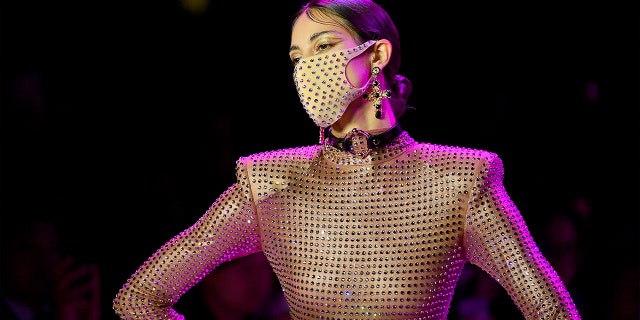
A model wearing a Pitta Mask walks the runway for The Blonds during New York Fashion Week: The Shows at Gallery I at Spring Studios on February 09, 2020 in New York City. (Photo by Roy Rochlin/Getty Images for NYFW: The Shows)

Model wearing a studded face mask at The Blondes NYFW 2020 show (Photo credit: Roy Rochlin/Getty Images for NYFW: The Shows)


London Fashion Week face mask video by The Telegraph

Guests wear protective masks as a model walks the runway at Dries Van Noten in Paris. (Photo credit:  ANNE-CHRISTINE POUJOULAT/AFP via Getty Images)

What started out last season as “anti-pollution” masks at French designer Merine Serra’s spring show, has quickly morphed into “virus protection” accessories for fall 2020.

Models wearing facemasks at Marine Serre's Paris Fashion Week show

                                                                                                                                           Marine Serre Paris Fashion Week Show (Photo credit: Getty Images)

The Timeline

The timing couldn’t have been worse, but I guess you can say, New York Fashion Week dodged a bullet. A few days before NYFW (Feb 6-13) the CFDA issued a coronavirus statement on their website with info given to them by the NYC Department of Health and Mental Hygiene (DOHMH). The message:

” the risk to New Yorkers is low, there are ZERO cases in NYC and only 6 cases as of 1/30/20 had been confirmed in the U.S. but none in NY State.”

London Fashion Week (Feb 14-18) wasn’t so lucky. A majority of Chinese press and buyers were unable to travel, a forewarning of the serious financial impact that the virus will have on business, since China is responsible for a third of all global luxury sales and where many of the textiles used in collections are made. Thousands of people, including about 2,500 ticket-buying members of the public were scheduled to attend more than 60 presentations. To assuage fears, each night London’s fashion show venue was given a  “deep clean” and antibacterial hand sanitizers were distributed to those who did attend. Some attendees even brought their own face masks! Adding to the problem, several Chinese designers were unable to travel due to a travel bans, and therefore had to cancel their New York, London, Milan and Paris shows.

Giorgio Armani poses in front of models at his Fall 2020 show. (Photo credit: Instagram@GiorgioArmani)

By Tuesday Feb 18th, the scheduled start of Milan Fashion Week, the fashion industry was jittery. The coronavirus outbreak first hit the city that weekend as Milan Fashion Week neared its end. As a precaution, on Feb. 22nd Giorgio Armani announced that he would no longer host a runway show to an audience, instead, he would live stream his show behind closed doors in an empty theater. Armani posted the announcement on Twitter, adding that it was a preventative measure in support of national efforts to safeguard public health. The company also closed its offices and plants in Northern Italy for the next week. During the end of Milan Fashion Week (Feb 24th), a number of shows and events were cancelled and then on Feb 26th, the first case of coronavirus, linked to Milan Fashion Week, was confirmed in Greece.

At the start of Paris Fashion Week on Monday Feb 24th, anxiety was at a fever pitch, although no shows were cancelled (gotta love the French – the show must go on!). Models both on and off the runway were donning designer face masks validating the newest fashion accessory…the Designer face mask  I mean, who but the French would pass up a “new fashion accessory opportunity”?

Japanese fashion model Kozue Akimoto, seen wearing a face mask and red coat outside Marine Serre during Paris Fashion Week. (Photo credit: Christian Vierig/Getty Images)

More Coronavirus Fashion Week News

LONDON

Burberry’s creative director, Ricardo Tisci, presented his Burberry fall 2020 show in London with great success but announced that because of COVID-19, they would postpone their fall 2020 Shanghai show slated for April 23rd  and a new date has yet to be revealed. 

During an interview with Vogue, Tisci talked about how he’d lived in India and learned meditation after studying in multicultural London at Central Saint Martins before he started his own label in Italy. For fall 2020, Tisci featured sophisticated tailoring with an innovative twist, such as looped collars on trenches and double-layered coats. There were plenty of references to India, with pleated madras checks on everything from layered dresses to men’s suits. For evening, a category that Tisci introduced for the label, he showed a silver chainmail dress with crystal fringe detail that was a real showstopper. Perfect for Tisci’s fashion-forward clients.

Riccardo Tisci and his models at the Burberry Fall 2020 show. (Photo credit: Instagram @burberry)


MILAN

Prada has also postponed their upcoming resort 2021 show, which was to be held in Japan on May 21.  The company released the following statement: “The decision was made as a precautionary measure as well as an act of responsibility and respect for all the people working on and planning to attend our resort 2021 show.” Prada will reveal a new location and date in the near future.

Fortunately for Prada, the coronavirus did not affect their Milan show.  Miuccia Prada, always the feminist, when asked about her collection,  “We can be strong and feminine at the same time…women carry the weight now. You can be delicate and frivolous and still hold power and be in command.” So it was no surprise that on the runway, she mixed “clichés of femininity,” as she described them to Vogue, accompanied pieces traditionally considered masculine. The designer combined boxy belted jackets with fringe skirts and crisp bib-front shirts were glammed up with strips of crystal fringe. There were also plenty of flirty embroidered car-wash skirts, delicate sheer layers dresses with lotus-flower prints, and terrific outerwear, most notably the belted leather puffer jackets.

Prada’s Fall 2020 women collection. (Photo courtesy of REUTERS/Alessandro Garofalo)

In other exciting Prada news, it was just announced that Belgian-born Raf Simons will be working alongside Miuccia Prada as co-creative director for the brand. The collaboration between Simons and Miuccia – who has been at helm of Prada since 1978 – is said to come from “a deep reciprocal respect” between the two designers. “It opens a new dialogue, between designers widely acknowledged as two of the most important and influential of today,” said the brand in a statement.

The fashion world eagerly looks forward to the possibilities of what these two creative geniuses will construct.

Prada announces co-creative directors Miuccia Prada and Raf Simons. (Photo credit: Vogue)


PARIS

Chanel’s artistic director Virginie Viard will show her fall 2020 Chanel collection on Tuesday, March 3rd, but the house revealed that they are postponing the re-staging of its Métiers d’Art show in Beijing, which was slated to take place in May. The collection was originally shown in Paris on Dec. 4th.

Chanel released a statement: “Considering the current situation and following the guidance of Chinese authorities, Chanel has decided to postpone its project of a replica of the Paris – 31 Rue Cambon 2019/20 Métiers d’Art collection in May in Beijing to a later date and more appropriate moment.”

Dedicated to CHANEL’s Fashion Métiers d’art, this collection highlights the creative dialogue between Virginie Viard and the Maisons d’art, enhancing the creations of the House. (Photo credit: Chanel)


At Christian Dior, Maria Grazia Chiuri’s show notes stated, “All our thoughts are with our teams, clients, friends and partners in Asia, Italy and around the world.” Known for her feminist movements, Chiuri did not disappoint with her fall 2020 Christian Dior collection. This season the creative director worked with the neo-conceptual artist collective Claire Fontaine in designing the runway where neon lights flashed messages such as, “When women strike the world stops.” “Patriarchy = climate emergency.” “Consent. Consent. Consent.”

Thankfully, Chiuri’s collections for Dior always live up to the dramatic spectacle she creates.  She opened the show with the houses’ famous Bar jacket, but this time in a chic pantsuit version. The show had a relaxed and youthful elegance with homage to Marc Bohen’s tenure at the house in the ‘70s.  Chiuri showed logo puffers, denim jackets and jeans, jumpsuits and plaid looks that ranged from belted coats to miniskirts. For evening there were silk fringe looks that were cohesive with the youthful collection. Hint, hint…fringe is back!

Looks from Dior’s fall 2020 collection. (Photo credit: Getty Images)

Dries Van Noten took virus precautions very seriously as he had ushers hand out face masks at the entrance to his show at the Opéra Bastille on Feb 26th. There were also large pump bottles of hand sanitizers stationed just beyond the metal detectors, which, by the way, now greet guests at every show. While the outside world all around us may be a frightening place, due to the epidemic of the coronavirus, political turmoil, and a rise in hate crimes, Dries Van Noten’s runway was a happy place, filled with glamorous looks inspired by the ‘70s and ‘80s. In an interview with Vogue, Van Noten stated, “It’s about going out, enjoying life—having fun, that’s very important! I thought of this party girl. Something mysterious. Something dark. But I questioned how far it could go, while staying contemporary.”

So, how did Van Noten translate his idea on the runway? Think casual glamour. Case in point, a plaid coat thrown over a chunky cardigan and feathered skirt. The designer also showed plenty of jungle prints in acid green and fuchsia, as well as a nod to grunge with plaids and shirts tied at the waist. There was definitely a Christian Lacroix influence, since the two collaborated with each other last season (they started the whole creative director collab trend). Van Noten showed a velvet blazer in emerald green, Art Deco-inspired iris print dresses, a purple paillette jacket and a heavily beaded sarong, paired with a semi sheer blouse.


Dries Van Noten’s Fall 2020 Show. (Photo credit: Reuters)

At Maison Margiela, John Galliano had several models walk the runway in face wraps. However, this wasn’t post-apocalyptic in any way, rather a delight of rejuvenation.  During his post show podcast, Galliano exclaimed “Restorative! The idea of giving something a new life…Kick-starting a new consciousness.”

Galliano opened the show with a series of outerwear elements, or “memory of” coats attached to a sheer base worn over sheer layered dresses that were whimsical and delightful – all in rich hues. Later he showed full coats in generous proportions. At times they were spliced together, as if they were once two separate garments cut in half and sewn together. These deconstructed looks, or what he calls a “work-in-progress” technique is what makes Galliano the perfect designer for the Maison Margiela label.

Maison Margiela Fall 2020 Show. (Photo credit: The New York Times)

At UoF, we’ve been asking about the relevance of fashion shows from the standpoint of cost/benefit, as well as their carbon footprint. Is it time for us to embrace 3D technology and create virtual fashion shows? Care to share your thoughts?


ARE FASHION SHOWS STILL RELEVANT?

Louis Vuitton’s spring 2020 show. (Photo courtesy of Vogue.com)

As our industry grapples with the impact of fast fashion on our planet and explores circular fashion concepts, such as ‘fundamental redesign’ (the shift from a ‘take-make-waste’ model towards a ‘reuse-based’ model), while other more responsible brands move to put the health of our planet over profits, we must ask ourselves… are fashion shows still relevant?

Add to these concerns the reality that designers are expected to execute four collections a year (spring/summer, fall/winter, resort, and pre-fall) as well as produce an expensive fashion show twice a year. As the industry once again ponders whether the expense and the number of shows are necessary, especially in a digital, on-demand, eco-conscious environment, the fact remains that consumers are not spending as much money on clothing as they are on technology and vacations. So, is this pace and expense sustainable?  Let’s take a look. But first, let’s explore the origins of the fashion show.

History of the Fashion Show

According to Historical Dictionary of the Fashion Industry, written by our founder, Francesca Sterlacci and Joanne Arbuckle, the former Dean of the Fashion Institute Technology:

“The first fashion shows can be traced to Paris, beginning in the mid-1800s, with designers Charles Frederick Worth, Jeanne Paquin and Jean Patou. Worth was the first to design and display his own creations for women to choose from, via a “fashion show” on live models, four times a year.”House-of-Redfern---Galerie-de-vente---Paris-fashion-1910
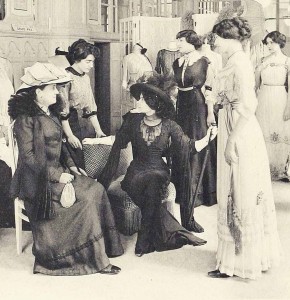
 

Fashion models and society ladies at a designer salon circa 1910 (Photo credit: Glamourdaze.com)

The Paris salon show schedule would inevitably become the foundation for ‘fashion weeks’ in Milan, London, and New York. These cities became known as the “Big Four,” the largest and most important centers for fashion. In its early days, shows were solely for core customers, buyers and editors. The general public didn’t see the latest designer wares until they were available in stores some four to six months later. Even fashion magazines understood that the latest creations could not be unveiled in their editorial pages until they could actually be purchased by the consumer. A concept that has changed over time but may need to be revisited.

In 1943, New York fashion designers held ‘press weeks’ in fall and spring whereby editors and buyers would swarm to ritzy hotels to view the latest designer runway presentations.  For decades, this is how the system worked. Runway shows offered buyers and editors a chance to see designers’ collection, six months before they became available to the public. This helped buyers plan their “open-to-buy” and advertising budgets, and for editors to plan the trends that they would promote and feature in their editorial pages. Fun fact: American fashion publicist Eleanor Lambert was the first to create fashion shows as charitable events with her March of Dimes shows (1948-1960), that not only raised money but helped promote American fashion design.

Christian Dior Show in 1948 (Photo Courtesy of AP Photo)


The Fashion Calendar

With so many fashion shows to coordinate among the “Big Four,”  a schedule was needed to keep shows from overlapping. Enter Ruth Finley and her fashion calendar, known in the industry as the “Pink Bible.”  In existence since the 1950s, the Fashion Calendar still is “the” fashion planner for all fashion runway shows and other related fashion events.  In 2014, the Council of Fashion Designers of America (CFDA) acquired the Fashion Calendar. Today it has six hundred and fifty subscribers and available in digital format only. No serious designer would dare schedule their show without first consulting with Fashion Calendar.

Fashion Weeks: NYFW – LFW – MFW  & PFW

New York Fashion Week (NYFW), as we know it today, began in 1993. Fern Mallis, then executive director of the CFDA, took hold of fashion’s schedule and tried to centralize the shows so that buyers and editors were not shuffling all over the city.  “Organized shows put American designers on the map and changed the fashion landscape forever,” Mallis told Racked in 2015. “Before that, there were 50 shows in 50 locations. Everyone did their own thing without understanding what a nightmare it was to get from one show to the other.”

      “To dispel the myth that U.S. fashion designers were influenced by their European counterparts, in 1998, American designers decided to move their fashion show schedule ahead of Paris, London and Milan and instead of being the last show, they became the first. This has remained the schedule into the twenty-first century.” ~ Historical Dictionary of the Fashion Industry

Bryant Park, located in mid-town Manhattan, was home to NYFW for 16 years. It was the first time designers were offered the option to present their fashion show without the responsibility of having to produce a fashion show from scratch –  the space, lighting, sound, and security were all handled by a production firm (IMG). That’s not to say it was cheap. According to Forbes.com,  “In 2007, a show at Bryant Park cost at least $50,000 for designers, according to one estimate.” Bryant Park  heightened awareness of NYFW and the fashion game began to change. It also provided an opportunity for designers to invite celebrities to sit front row, next to editors and later led to the rise of fashion bloggers and influencers.

By 2010, and with nearly 300 scheduled shows, the fashion crowd outgrew Bryant Park. NYFW was then moved to Lincoln Center for several seasons, however, as we all know, fashion is fickle. Today NYFW shows are primarily held in spaces along the West Side Highway and at Manhattan’s Hudson Yards, where the spaces are larger and New York City traffic is less of an issue.

Bloggers & Influencers- From left: bloggers Bryanboy, Rumi Neely, Leandra Medine, Natalie Joos, Elin Kling &

Hanneli Mustaparta attend the Phillip Lim Spring 2014 fashion show in New York City. (Wendell Teodoro/WireImage, via Getty)

The Birth of the European Fashion Show Extravaganza

While U.S. designers mostly stayed faithful to the traditional runway show with models parading down a long narrow catwalk or in a passerelle or semi-circular format, their European counterparts favored the extravaganza. For example, Nino Cerutti’s used publicity stunts to self-promote, such as when he painted Lancia convertibles blue, then paraded them down the streets of Rome and onto the runway, where a starlet then broke a bottle of champagne on the hood. Designers Claude Montana and Thierry Mugler staged fashion show “extravaganzas” during the 1970s and 1980s that became media hypes, with fashion models often upstaging the clothes. In the late 1990s and early 2000s, designers John Galliano and Alexander McQueen continued to create some of the most spectacular shows, often with celebrity guests in attendance and sometimes even taking to the catwalk. Viktor & Rolf, Chanel, Rick Owens, Fendi and Ricardo Tisci at Givenchy transformed the fashion show experience for the new millennium by: creating avant-garde conceptual performances, adding plus size models and introducing technology, such as the Fendi show in 2015 that used drones to film and live stream the show.

Broken Fashion Show System

According to the Historical Dictionary of the Fashion Industry, “By 2015, designers, buyers, fashion journalists and fashion organizations, such as the Council of Fashion Designers of America and the British Fashion Council, began to examine the “broken” fashion system as it related to the overcrowded fashion show schedule, the excessive number of shows and the relevance of showing fashion that cannot be immediately purchased; since the traditional fashion show system features merchandise six months in advance of the selling season and live-streamed fashion shows are available to consumers where immediacy is key for consumers in a digital age. Burberry was the first to make the decision to change the model by; showing only two collections a year, combining their menswear and womenswear in the same show, featuring clothes in season and not six months ahead of the season, and making the merchandise for sale immediately afterwards. In 2016, recording artist Kanye West and Adidas made fashion history when, timed to the launch of West’s new album The Life of Pablo, they held the first ever consumer ticket-holder fashion show at Madison Square Garden with tickets for their Yeezy-Adidas show priced at $275 each.”

Today, shows are not only photographed for social media, but they are also live-streamed so anyone sitting at home in front of their computer can tune in. Fashion shows have now evolved into marketing spectacles directed towards a mass audience. Hundreds of thousands attend fashion week, but thanks to today’s digital world, millions of people live-stream fashion shows online. So the purpose of fashion week seems clear; capture the attention of as many people as possible; visibility leads to sales, right? Only to a degree.  Unfortunately, the equation is not so straightforward and for years the question of “is fashion week dying” has been an ongoing conversation among fashion insiders.

“In a world that has become increasingly immediate, the current way of showing a collection four months before it is available to consumers is an antiquated idea and one that no longer makes sense,” designer Tom Ford told WWD in 2016. “We have been living with a fashion calendar and system that is from another era.”

While some may believe the fashion week runway format is archaic, this system still exists, but has arguably lost step in a world where everything is instantly visible across various social media platforms. Today, designers and brands can bypass store partners and sell straight to their customers through their own websites. It has become routine for consumers to stream new products that fast fashion popularized and these forces have transformed the fashion industry.

Enter Instagram

One of the biggest game-changers for the industry has been Instagram. The popular social media platform creates a constant connection between brands and customers and has helped reshape the way brands communicate to potential customers. Designers even create Instagammable ‘moments’ during their runway shows.

Chanel transformed the Grand Palais into a beach scene during Paris Fashion Week in October 2018 (Photo courtesy of Reuters)

And yet, fashion shows and their organizers aren’t disappearing time soon, in actuality, the reverse is happening, as more cities around the world are staging their own fashion weeks including Shanghai, Seoul, and even Canada. Many prestigious designer houses have even opted to show full runway extravaganzas for their resort and pre-fall collections as well. Many brands, both large and small, are joining the fashion week cycle because of the prestige and exposure that comes with it.

But one must ask, is the exposure worth the price tag that goes along with producing a fashion show?

Of course, the answer varies by brand. In 2019, Christian Siriano provided a breakdown of his show cost for Vogue Business that reached up to $300,000. It included models, set design, lighting, sound, and all the elements needed to create a runway show. According to an interview in Vogue, Siriano stated, “I think when our investors go through the numbers, it’s really hard for them to see actual returns, obviously, there are ways to tell if a collection is more successful than another, but that doesn’t necessarily have to do with the show. It has more to do with the timing, or the fabrications we’re using or what’s happening with the seasons.”

Christian Siriano’s spring 2020 show. (Photo courtesy of Vogue.com)

While a six-figure tab will give you a basic fashion show format, there are those designers who go to the extreme during NYFW. In 2011, The New York Times reported that Marc Jacobs (following in the European show extravaganza tradition) spent $1 million to produce his show. While these grand spectacles are a tool to sell clothes, the buyers attending these shows do not buy their collections during the show, but rather sales take place during private showroom appointments. So is it all worth it?

Rachel Feinstein’s set for Marc Jacobs’ Fall 2012 show. (Photo courtesy of Vogue.com)

The reach and cost-effectiveness of having such a show is difficult to determine. Most brands look to Instagram as a tool to determine how many potential customers have viewed their runway videos and images.

To hype their show and encourage sales, some brands have tried to offer customers specific looks immediately after the show, both in their stores and on their website, in an attempt to translate the excitement of the runway moment. Others have opted to live stream their runway show so customers can view the show and then immediately shop the collection. A few designers – such as Gucci and Balenciaga- have taken to regularly dropping new items between shows.

So with a six-figure price tag, many young designers are conflicted and ask the question, “is a fashion show worth the cost?” Well for many, the answer is yes. A fashion show is a great marketing tool. It is a way to get customers to notice your exciting and creative work. For many luxury brands, a show is a marketing tool to sell cosmetics, perfume and accessories. These brands may actually lose money producing clothes, as Exane BNP Paribas and the fashion consultancy firm VR Fashion Luxury Expertise have noted. But runway shows and their creative clothing are valuable to the branding. “Today shows have nothing to do with clothes anymore,” Guram Gvasalia, the CEO of Vetements, told WWD after the brand reorganized the scheduling of its runway shows in 2017. “Most of the looks are not even produced and therefore never get to the shop floor. Shows are there merely to sell a dream and that, at the end of the day, will sell a perfume or a wallet in a duty-free store.”

For smaller labels, branding is also an important opportunity that can benefit their brand. Christian Siriano told Vogue Runway that his shows, which have been praised for his diversity in models, have attracted other business, such as a shoe partnership with Payless. Presenting during a major fashion week also adds credibility and legitimacy to a young label. It can help put their brand on radar of industry leaders. Stylists for example keep an eye on fashion week and pull clothes for photoshoots and celebrity events. A young designer can easily land in an editorial layout or on the red carpet on a major celebrity. Or, catch the eye of a savy store buyer who just might be willing to give them a break.

The fashion industry represents over $2.5 trillion dollars (according to a recent McKinsey report in 2018) and, on average, a 10 to 15 minute fashion show can cost anywhere from $200,000 to over $1 million. With these hefty price tags brands must think, “what is the return on investment?” Is the answer social influence? Is it celebrities and street-style stars wearing the collection? Well, according to data analytics provider Launchmetrics, the answer is more complex.

Launchmetrics’ new “Data on the Runway” report suggests the key is MIV or media impact value – an algorithm which measures the impact of media placements to derive a number for performance outcomes.

Take Ralph Lauren’s 50th year anniversary for example (spring 2019), Launchmetrics’ data analysts found that Ralph Lauren’s widely publicized anniversary show ranked first amongst the brands, with the highest MIV generated over the Fashion Weeks at $38 million.

The star-studded event included Hillary Clinton, Oprah Winfrey, Robert De Niro, Donna Karan, Calvin Klein, and Anna Wintour. Lauren also hosted an extravagant collection presentation and finished with a paparazzi-heavy post-show dinner party.

Left to right: Hillary Clinton, Ralph Lauren, and Anna Wintour. (Photo courtesy of Instagram@Ralph Lauren)

According to Launchmetrics, it is clear that influencers garnered enormous buzz for the brand (taking 46.2% of the pie), followed by Ralph Lauren’s owned media channels (at 29.7%).

Following Ralph Lauren, Launchmetrics estimated Coach ($27 million), Dior ($22.6 million) and Gucci ($19.4 million), followed closely behind and once again, Chiara Ferragni topped the charts as the top influencer voice.

Chiara Ferragani (known as The Blond Salad) led with $18.3 million in MIV; to put that into perspective, she nearly reached the same MIV as Versace ($18.7 million) did for their SS19 show — proving the continual power of influencer investments.

Influencer Chiara Ferragni (right) attends many shows over Fashion Month and is expected to boast $18.3 million in Media Impact Value – Zimbio.com

According to Forbes magazine, “social media actually proved imperative for fashion brands altogether; posts shared by celebrities and influencers represent an impressive 89% of buzz compared to online media’s 11%. Spring/Summer 19’s top-performing celebrity was Nicki Minaj, who generated a total of $11.3 million MIV over the season.”

Alison Bringé, CMO at Launchmetrics, said: “Today, fashion weeks are no longer industry events but are a platform to reach the digital savvy consumer, so brands need to think outside the box in order to transform their 15-minute event into something that lives on, beyond what happens on the runway. The case studies within the report shed light on how brands can generate buzz through activities such as using influencers to create 360° campaigns, changing their location to talk to new consumers and markets, or even by focusing on their own media to increase the share of wallet.”

While the ROI for having a runway show differs for every brand, one point is clear; a fashion show is the best way for a designer to communicate their creative vision. “For me, the show is the only moment when I can tell my story,” designer Dries Van Noten once told The Independent. “It’s the way I communicate my ideas to the world.”

Dries Van Noten’s men’s spring 2019 collection, inspired by the work of interiors designer Verner Panton (Photo courtesy of AP Photos)

“If I couldn’t do my shows, I wouldn’t want to be in fashion,” designer Thom Browne told author Booth Moore in her book, American Runway. “I look at my shows as my responsibility in the world of design to move design forward. I think they are such an amazing way of giving a more interesting context to fashion.”

Thom Brown’s spring 2020 show. (Photo courtesy of Vogue.com)

So in the end, we ask these questions: 1) Are fashion shows still relevant? 2) How do emerging designers afford the fashion show price tag? 3) Will the next generation of designers find an affordable alternative to the fashion show? 4) Will millennial & Gen Z designers find a way to disrupt the status quo and make the fashion show as obsolete as the floppy disk? 5) Will we soon be watching virtual 3D fashion shows with life-like avatars walking the runway?

Share your thoughts, we’d love to hear from you!